In today’s dynamic educational landscape, the choice between online vs. blended learning in the Philippines has become an important decision for students and institutions alike. With the Department of Education’s rollout of the Strengthened Senior High School Curriculum starting SY 2026-2027, more students are weighing their options between a fully digital setup and a hybrid classroom experience for Senior High School.
The digital age has introduced new academic possibilities, reshaping traditional classroom standards. Nowadays, online learning in the Philippines has become the norm. Various institutions have adapted their digital systems to accommodate this setup, offering programs that range from purely online setups to a blended mix of digital and face-to-face instruction.
And while online and blended learning offer flexible alternatives to traditional classroom learning, each comes with its own advantages.
What is Online Learning?
Also known as e-learning or distance learning, online learning is an educational mode that delivers content entirely over the internet, often through learning management systems (LMS) or online platforms.
While this setup has become a popular option for several years now, many parents still question its legitimacy. They wonder whether online education is relevant to the Philippine system or if it can truly match the standards of a traditional classroom.
Some of the key components and benefits of online education to consider are:
1. Flexibility and Convenience
Online learning offers flexibility. With this modality, you can access course materials, lectures, and assignments at your own pace and schedule. With this flexibility, you can fulfill your personal obligations as you pursue your education.
2. Accessibility
One of the advantages of online senior high school classes is that they close geographical gaps. Want to access high-quality education from anywhere in the country? No problem! With e-learning, you can enroll in courses and programs you want to pursue, expanding your options and opportunities. All you need is a laptop and a reliable internet connection, and you’re good to go.
3. Cost-Efficiency
Online courses are generally more affordable compared to on-campus programs. Since everything is done and available online, you can remove the costs of commuting and physical textbooks. Other than that, you also lessen the costs of using campus facilities, as everything is done digitally.
4. Self-Directed Learning
With the flexibility of online classes, learners can practice their self-discipline and time management skills. They’re responsible for setting their study schedules and routines to adhere to class deadlines without their teacher’s supervision.
With digital education, there are two common forms of studying: synchronous and asynchronous learning.
- Synchronous: With this type of digital learning, your class participates in real-time activities through live video lectures or virtual classroom discussions. This approach replicates the structure of traditional classrooms, except for its mode of delivery.
- Asynchronous: This type of online education simply means that you can access course materials and complete assignments at your own convenience. While you may still have project deadlines, there’s no requirement for real-time virtual discussions or meetings.
Overall, the goal of online learning is to provide students with quality education and equal access to school resources. With digital instruction, institutions can offer you more opportunities to achieve academic excellence that will aid your future career.
What is Blended Learning?
Blended, or “hybrid,” learning is a form of education that combines elements of traditional classroom instruction and online instruction. This approach leverages the strengths of in-person and digital education to provide a holistic educational experience for students.
Now, you may be wondering, “So, what’s the difference between blended learning vs. e-learning?” To answer your question, here are some of the advantages of taking hybrid classes:
1. Flexibility with Structure
Blended learning in the Philippines offers a middle ground for traditional and online learning. While some aspects of your chosen program are conducted online, there are still scheduled in-person sessions.
This structure benefits both students and teachers who value face-to-face interactions yet require the flexibility of digital learning. It provides programs that require in-person demonstrations and opportunities to discuss complex ideas.
2. Personalized Learning
By incorporating online learning components, hybrid demonstrations enable personalized educational experiences. You can choose when and where you complete the online portions of your course, tailoring your learning to your needs.
3. Enhanced Engagements
Combining both online and traditional learning elements can increase engagement among you, your peers, and your teachers. With online modules, you can join discussions and activities. With face-to-face sessions, you can enjoy social interactions with your classmates outside of digital platforms.
4. Time Efficiency
Blended learning can be a time-efficient educational form. Your class can cover the foundational content of your course online and use in-person sessions for deeper discussions, collaborative projects, and hands-on activities.
With hybrid classes, various models are used to support learning, depending on your program’s educational goals and resources. Some common blended learning models include:
- Rotation Model: In this model, your class rotates among different learning modalities. You switch from traditional classroom instruction to online self-study and group activities. This rotation can be based on a fixed schedule or individual progress.
- Flipped Classroom: In a flipped classroom, traditional lecture-based instruction is replaced with pre-recorded online videos and other learning resources. You review these modules independently before attending face-to-face sessions where your class can discuss, collaborate on projects, and do hands-on activities based on your virtual session.
- Flex Model: In the flex model, you have the flexibility in choosing when and how you engage with online and in-person learning components. This approach is often used in higher education where students are allowed to customize their learning paths.
- Online Lab Model: In this model, your class attends traditional sessions. However, you will have time to complete specific online learning activities or assignments in a dedicated computer lab or online environment.
In a nutshell, blended learning is a flexible and innovative approach that utilizes the principles of traditional and online learning. It provides you with a well-rounded and adaptable learning experience through both learning modes.
Deciding Between E-Learning vs. Blended Learning
By understanding the difference between blended learning and online learning, you can make an informed decision about which education modality works best for you. Ultimately, the choice between attending online school and regular school depends on your preferences, goals, and circumstances.
To help you come up with a final decision, here are some factors you can consider:
1. Learning Style
Before deciding, one of the first things you should consider is your learning style.
- Are you comfortable with independent online study?
- Are you amenable to managing your own time for self-directed learning?
- Do you thrive in a structured in-person classroom environment?
By answering questions like these, you can pinpoint which learning style you prefer and guide your decision between online or hybrid education.
2. Time Commitment
Consider your schedule and time commitments in the other aspects of your life. Online learning offers flexibility in terms of when and where you study. Blended learning, on the other hand, combines online and in-person sessions. With this class style, you may need to manage your time better to balance school responsibilities and personal appointments.
3. Social Interaction
Another aspect to think about is your need for social interaction. Do you value face-to-face discussions and group activities? Or are you more comfortable with virtual interactions and asynchronous learning? Generally speaking, extroverts may prefer attending in-person meetings, while introverts may be more comfortable communicating online. Which one are you?
4. Academic Goals
Of course, your academic and career goals also play a significant role in choosing which mode of learning suits you. Certain programs or fields are better suited to one learning approach or the other, depending on their curricula.
For instance, students can mix electives across the Academic and Technical-Professional clusters based on their interests, in accordance with DepEd’s Strengthened SHS Curriculum now being rolled out. This actually makes flexible learning setups, such as blended or online classes in the Philippines, more relevant since students now have more say in shaping their own academic paths.
Before committing to a specific learning mode, take time to consider these factors. Take a piece of paper, write your goals and living circumstances, and then create a pros-and-cons list. That way, you can clearly visualize which modality would fit you the best. After all, receiving educational resources in a way you can understand and learn the most is the priority.
Choose E-Learning with OEd Senior High School
Now that you know the unique differences between online and blended learning in the Philippines, you can decide which learning method works best for you. What’s important is that you choose a learning mode that fits your goals and preferences, all while partnering with a reliable educational institution.
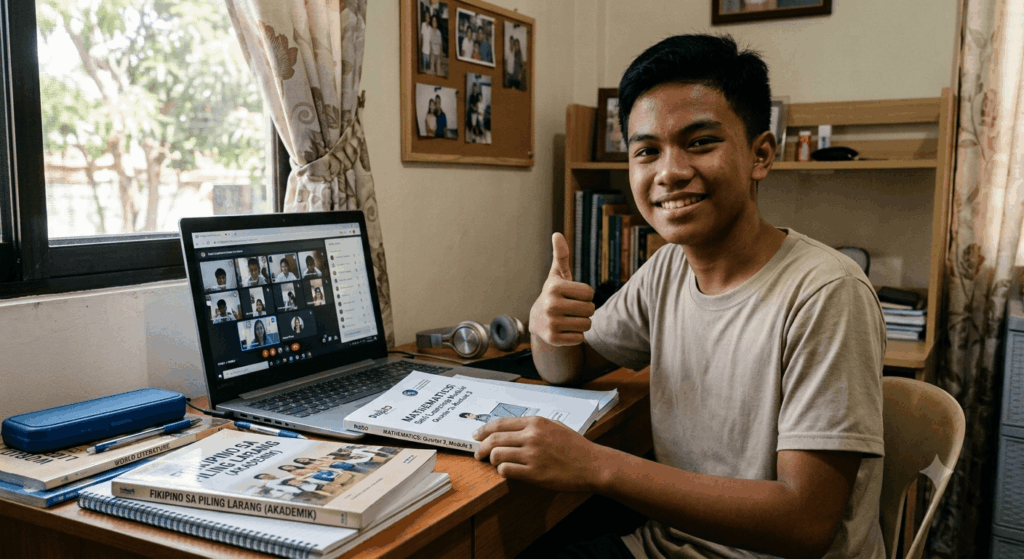
Here at OEd, we are the first to offer fully online senior high school in the Philippines. With our experience, we can ensure you receive a quality education that develops your skills and prepares you for further study.
Our years of e-learning teaching have enabled us to establish a reliable system you can use for your education. Rest assured that by partnering with us, you are investing in a bright future with a school that prepares you for college and future career success.
Check out the enrollment requirements for senior high school, or get in touch with us to learn more about our programs!
Frequently Asked Questions
1. Can I switch from online learning to blended learning (or vice versa) once I’ve enrolled?
It depends on the institution’s policies, but many schools do allow a shift between modalities at the start of a new term or school year, provided you meet their requirements. It’s best to check with your school’s admissions office if you’re considering a switch mid-program.
2. Will colleges and universities accept students who took online or blended Senior High School?
Yes. As long as the program is DepEd-recognized, graduates of online or blended Senior High School receive the same accreditation as those from traditional schools, meeting all requirements for college admission.
3. Do I need any special technical skills to succeed in online or blended learning?
Not really — basic computer literacy, like navigating a website or sending an email, is usually enough to get started. Most learning management systems are designed to be beginner-friendly, and schools like OEd typically provide onboarding support to help students get comfortable with the platform early on.